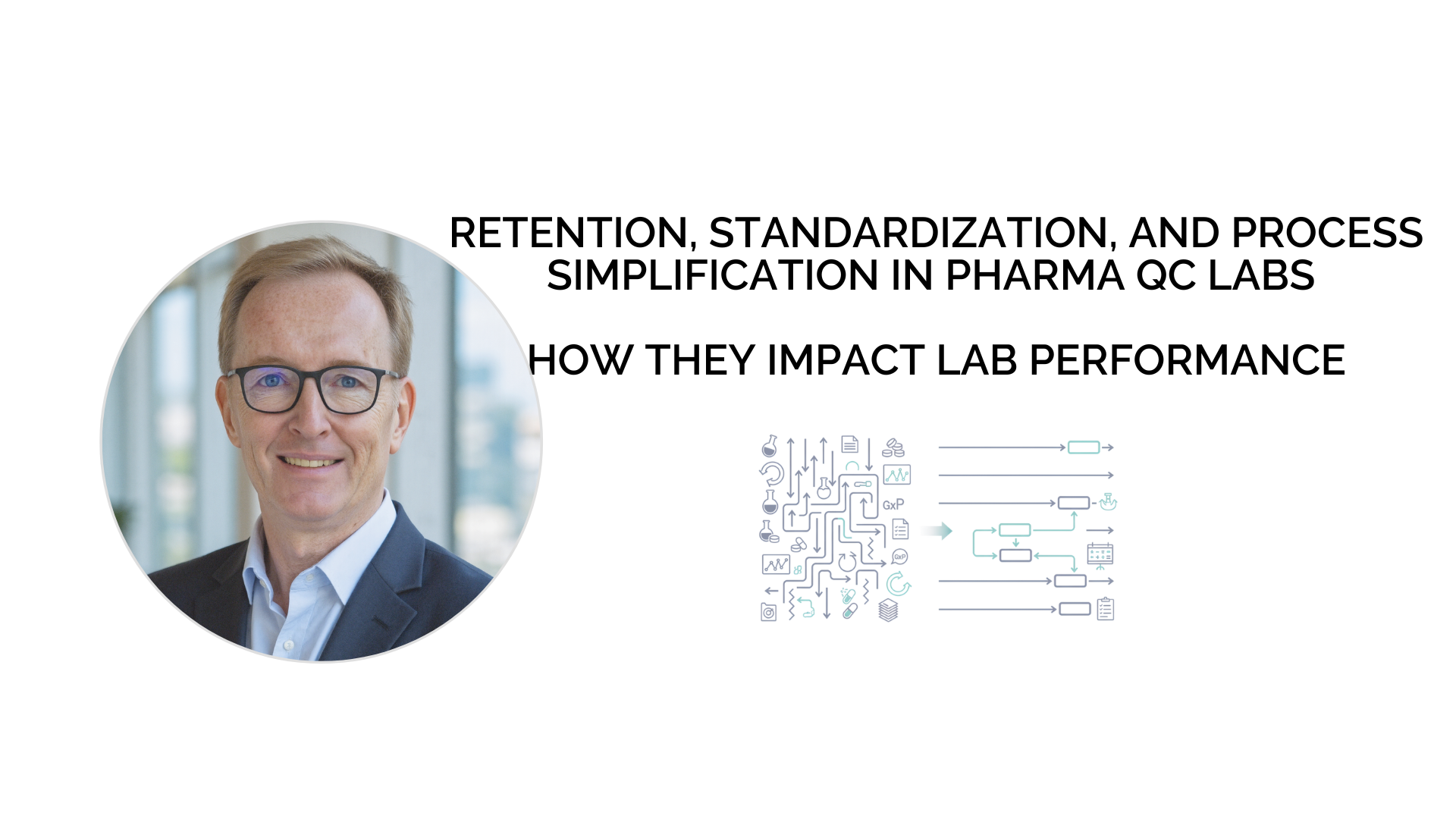
Retention, Standardization, and Process Simplification in Pharma QC Labs: How They Impact Lab Performance
Executive Summary: Impact of Retention, Standardization and Process Simplification in QC Labs.
- Turnover costs in QC laboratories: Turnover costs range from 50% to 300% of the annual salary of a qualified analyst, depending on the role, the complexity of the training, and the duration of the training.
- Ramp-up effect: New QC analysts often work at only 25–50% of an experienced colleague’s productivity in the first 3–6 months because they are learning and documenting simultaneously.
- Capacity loss: Training a new analyst can reduce the capacity of the existing team by 30–50% over several months, as existing staff must train, check and monitor the new analyst.
- Audit/compliance risk: Turnover increases the likelihood of deviations, repetitions and audit questions, which can tie up additional resources and delay time to market.
- The effect of standard work and lean: Studies in QC laboratories show that clear standard workflows and streamlined processes can significantly reduce turnaround time and the number of steps per sample — in some cases by one-third to one-half.
- Psychological effects: Studies of laboratory professionals indicate that participation in transparent processes, involvement in decision-making (e.g. Lean Kaizen events) and a perception of trust in direct managers can greatly enhance job satisfaction and commitment.
In analytical QC labs in the pharmaceutical industry, staff retention is not just an HR topic—it is a core driver of productivity, compliance, and time‑to‑market. In many quality labs, turnover is still perceived as a pure personnel or recruitment problem, while the real costs lie elsewhere: in lost capacity, extended study timelines, additional errors, and significant management time.
Fluctuation of employees impacts costs and productivity in Quality Control labs
In analytical QC labs, the cost of replacing a qualified analyst typically ranges from 50 to 300% of the annual salary, depending on method complexity, experience, and onboarding duration. The largest share of these costs is not driven by job ads or external fees, but by lost productivity during vacancy and ramp‑up periods.
Studies show that new QC analysts in the first three to six months often reach only 25–50% of the productivity of an experienced colleague, as they simultaneously learn, document, and require validation. This directly impacts longer turnaround times, delayed batch releases, and higher audit effort due to increased error and rework rates.
At the same time, turnover binds substantial management time: line and lab management must coordinate training, review approvals, ensure documentation, and reduce compliance risk.
This time is then no longer available for core value‑creation activities such as process optimization, digitalization, and performance‑enhancing initiatives — especially in pharmaceutical lab environments in Switzerland, Germany, and other European pharma‑locations where recruiting trained analytical specialists is becoming increasingly difficult.
Retention drivers in QC labs in the pharma sector
Retention in QC labs is further shaped by high regulatory pressure, repetitive work, long hours, and limited career perspectives. HR and industry analyses show that many lab professionals consider changing roles or companies after only 1–2 years when they experience limited development and little sense of purpose in their position.
At the same time, salary, career opportunities, and continuous development remain among the most critical factors for staying or leaving—not just in laboratories, but across the pharma and life‑science sectors. For lab management and C‑level, this means that retention is not a symbolic HR topic, but a strategic performance issue that appears directly in P&L‑oriented discussions.
Lab leaders and executives can address these dynamics systematically using three levers:
-
Cost transparency – including productivity loss, training effort, and audit‑related risks
-
Integration of capacity and turnover risks into method‑, stability‑ and release‑planning
-
Introduction of structured stay and development conversations at the line level.
Stay interviews and lab leadership culture
Transparent cost allocation, including productivity loss, training effort, and audit risks, makes turnover visible for decision makers and shifts retention from a pure HR budget item into operational planning.Lab managers who explicitly factor turnover risks into method‑, stability‑ and release‑plans can proactively buffer capacity bottlenecks, skill gaps, and hiring time.
Stay interviews and regular development conversations help uncover precisely what lab professionals find frustrating or motivating in their roles.
Research on stay interviews indicates that structured, recurring conversations with immediate supervisors increase trust, enhance the perception of appreciation, and clarify development opportunities.
These effects directly influence the likelihood of staying in the lab. Combined with clear learning paths and career options, lab roles become more attractive than a “staging area” before the next role change—particularly in DACH‑region countries, where qualified lab talent is increasingly scarce.
Standardization and process simplification as core enablers
Standardization and process simplification form a central pillar in this logic. When methods, workflows, responsibilities, and communication channels are clearly standardized, variation and errors decline, repeatability increases, and onboarding new analysts accelerates noticeably.
Case studies from QC labs show that the introduction of standard work, visualized workloads, and Lean‑style process flows can reduce turnaround times for critical analytes by a third to half—while maintaining stable capacity utilization. These effects relieve experienced teams that would otherwise remain trapped in an ongoing onboarding cycle, while simultaneously bearing primary responsibility.
Sources cited in this article: underlying literature and studies:
- Analyses of turnover costs and process/lean optimizations in QC laboratories, including publications by Roche Diagnostics, Biosero, KanBo, BSM Lean, Bluecrux, and Binocs on turnover costs in laboratories.
- Stay interview studies (e.g., APQC, studies on laboratory and R&D professionals).
- HR and pharmaceutical studies on employee retention in laboratory and QC functions, career paths, and stress factors.
- Work on optimizing laboratory workflows and process standardization in pharmaceutical laboratories.